
To what extent does modern airpower require a drastic reconceptualization? After the Soviet Union collapsed, the U.S. emerged as the sole global superpower, increasingly relying upon airpower to retain its dominant position. This was exemplified in the aerial wars of the 1990s, as well as the attacks upon Afghanistan and Iraq in the 21st century. However, new competitors have arisen to challenge American aerial dominance, including the People s Republic of China, a resurgent Russian Federation, and even smaller powers who have invested heavily into anti-access, area denial capabilities such as integrated ground-based air defenses encountered over Syria, Libya, and the Korean Peninsula.
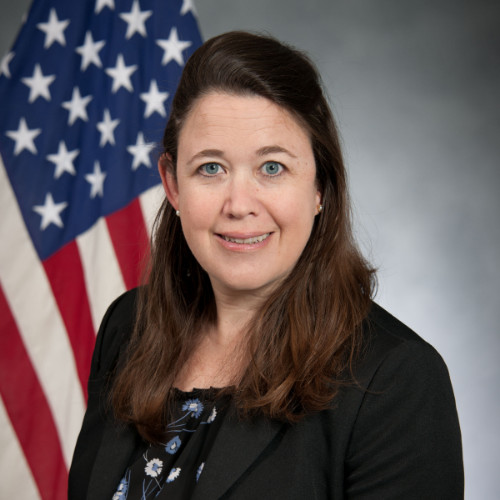
Dr. Heather Venable is an Associate Professor of Military and Security Studies in the Department of Airpower. She is now ACSC's Director of Research. She served as the course director for the former Airpower I and II courses. As a visiting professor at the US Naval Academy, she taught naval and Marine Corps history. She wrote How the Few Became the Proud: The Making of the Marine Corps Mythos, 1874-1918. Previous published work includes There s Nothing that a Marine Can t Do : Publicity and the Marine Corps, 1905-1917 in New Interpretations in Naval History: Selected Papers from the Sixteenth Naval History Symposium and The China Marines and the Crucible of the Warrior Mythos, 1900-1941 in Crucibles: Selected Readings in U.S. Marine Corps History. She was a non-resident fellow at Marine Corps University s Krulak Center from 2021- 2023 and is a Research Fellow at West Point s Modern War Institute. Professional service includes a managing editor for The Strategy Bridge.