
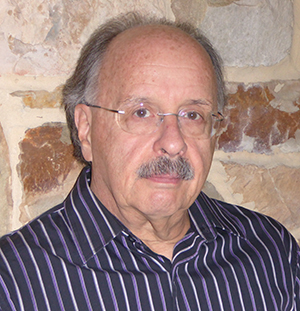
Speaker: James P. Lantolf, Pennsylvania State University
In this presentation I will argue that the assumption that language acquisition guided by natural psychological processes is the same no matter where or when it happens is problematic. I will argue instead that language development as it occurs in educational settings is, or at least, should be, a different process from what transpires in everyday immersion settings. Vygotsky conceived of education as a special kind of developmental process whereby learners encounter the object of study under artificial circumstances where intentional and well-organized instruction results in development that differs from what occurs in the everyday world. Accordingly, education provokes development through explicit systematic understanding of the object of study, including second languages. Our task is to make this knowledge available to learners in a systematic and pedagogically useful way and to help them make the connection between this knowledge and their own practical activity. In the presentation I will consider four studies carried out in accordance with Vygotsky s educational principles: the first focuses on the development of English verb-noun collocations with make, take, do, get, and have; the second deals with English phrasal verbs such as look up, spread out; the third instructs learners how to detect and interpret sarcasm, a pervasive feature of everyday spoken English; the fourth is an approach to teaching L2 reading through a division-of-labor pedagogy.